Shade & Temple

Best Fishing Sunglasses Under $50

Under $50 polarization is not the decision - nearly everything down here has it. The real choices are floating, reading a knot, and surviving a boat. Seven picks, none shared with our under-$100 page.

By Stephen V.Last updated How we pick

The verdict first. Our top pick is the KastKing Skidaway, a polarized frame from a tackle company rather than an eyewear one, with the stated UV rating and the medium wrap that make it the most complete sub-$50 fishing pair we track. The budget pick is the SUNGAIT Square Polarized Sports Wraparound at around twenty dollars, the cheapest frame here that states both a polarizing filter and UV400 and still wraps enough to keep side light out.

Here is the thing that makes this band different, and it surprises people. Polarization is not the decision under $50. It is close to universal down here — every one of the seven picks below states the filter, and so do most of the frames that did not make the list. The brands that treat polarization as a house standard are overwhelmingly the tackle and value brands, not the premium ones: by contrast, eight of the eleven frames we track between $100 and $200 state a NON-polarized lens. Our polarized ranking documents that distribution in full, and it is the single most useful thing a sub-$50 fishing buyer can know.

So what are you actually choosing between? Four things, and none of them is the filter:

  • Does it float? The most expensive thing about cheap fishing sunglasses is the ones at the bottom of the lake. One pick here floats; our floating ranking covers the format in full.
  • Can you tie a knot through it? If you are over about forty-five, this is the single biggest quality-of-life feature on the water, and a bifocal sun-reader costs about twenty-two dollars. Two picks here address it.
  • How much side light does it block? Water throws light at you from angles a flat lens never covers. A wrap matters more on the water than anywhere except snow.
  • Does the tint suit your water? Copper and amber lift contrast in shallow, stained or low light. Grey is the better choice for bright open water at midday. Our brown lens ranking and lens colour guide cover the choice.

What $50 does not buy, and we would rather say it. A glass lens — the Costa 580G benchmark does not appear under about $150 in this registry at all, and our glass ranking carries only five listings across two brands. A named contrast tint engineered for a specific water type. And a repair route: at this price you replace rather than repair, which is exactly why this page is the right answer for anyone who fishes from a boat.

One more thing worth knowing: no brand publishes a polarization efficiency figure. Not at $20 and not at $300. A cheap polarized lens and a premium one both get the word and neither gets a number, at any price. What the expensive frame buys is the medium around the filter — the material, the coatings and the optical stability — not a measurably better filter.

Every pick below carried a live price under $50 when our feed last refreshed, on November 23, 2026. The button on each row shows today’s figure and the date it was read rather than a number typed into this page.

How this is funded: we earn a commission if you buy through our links, at no extra cost to you. It never changes which product we recommend, and we’ll tell you when we’d skip one. Full disclosure.

Quick picks

Ranked on lens spec, UV protection, tint fit and buyer value. Select a row to jump to the full write-up. We have not field-tested these — here is exactly what we do instead.

#ProductBest forPrice
1
KastKing Skidaway Polarized

KastKing Skidaway Polarized

The value angler's pick. KastKing is a fishing-tackle brand, and the Skidaway is built for the water: polarized, UV400, with a grippy sport frame — at roughly a tenth of a Costa's price. You give up glass clarity, but for a backup or a first fishing pair, the glare control is genuinely there.

Best overall
$22.79 · View on Amazon

$29.9924% off

Price as of November 23, 2026. #ad How we’re funded

2
FLOTTIE ANCHOR

FLOTTIE ANCHOR

The budget slot, and the one marketplace floating frame that states both specs that matter rather than only the one that sells. Most cheap floating pairs advertise buoyancy and polarization and go quiet on ultraviolet; this listing states UV400 alongside them. That is the whole reason it is here instead of something two dollars cheaper.

Best floating
$26.60 · View on Amazon

$35.0024% off

Price as of November 23, 2026. #ad How we’re funded

3
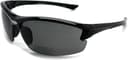
Renegade Patented Bifocal Polarized Reader (Half Rim)

Renegade Patented Bifocal Polarized Reader (Half Rim)

A half-rim frame is the quietly smart shape for a bifocal sunglass, because the bottom of the lens is where the magnifier lives and a half-rim leaves that edge open — so when you drop your eyes past the reading segment to look at your feet, there is less frame in the way. Renegade has been selling this one since 2016 with a polarized polycarbonate lens and 100% UV protection stated, in a single +2.00 power. It is the pick for an angler who ties knots and then needs to look across the water.

Best for tying knots
$22.00 · View on Amazon

Price as of November 23, 2026. #ad How we’re funded

4
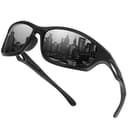
Paleshy Driving & Cycling Photochromic Polarized

Paleshy Driving & Cycling Photochromic Polarized

The same lens technology as the auto-tinting pair in a frame aimed squarely at the road. The listing markets it for night vision, and that is the claim to be careful about: a lens of any color removes light you need after dark. Bought as a daytime road and trail pair it is good value; bought as night-driving eyewear it is the wrong product.

Best for changing light
$31.99 · View on Amazon

Price as of November 23, 2026. #ad How we’re funded

5
Duduma Polarized Sports

Duduma Polarized Sports

One of Amazon's long-running budget sport bestsellers. The Duduma is polarized, UV400, and built on a TR90 wrap frame — a lot of sport sunglass for under $20. It's not premium, but as a knock-around fishing or cycling backup, the polarization does the job.

Best wrap coverage
$24.99 · View on Amazon

Price as of November 23, 2026. #ad How we’re funded

6
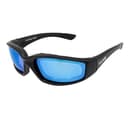
SOL PRO Foam Padded Polarized Riding

SOL PRO Foam Padded Polarized Riding

The rare riding frame that is both foam-sealed and genuinely polarized with a stated UV400 rating — which matters more on a bike than most riders realize, because the glare you are fighting is bouncing straight off wet asphalt and the roofs of the cars in front of you. Around twenty dollars for both features is unusual.

Best in wind
$19.23 · View on Amazon

$20.255% off

Price as of November 23, 2026. #ad How we’re funded

7
SUNGAIT Square Polarized Sports Wraparound

SUNGAIT Square Polarized Sports Wraparound

SUNGAIT's attempt at a sport frame, and a reasonable one: a lightweight polarized wraparound square marketed for fishing, golf and running. It is the pair to buy when you want a second, disposable sport frame rather than a primary one — the lens spec is honest and the frame is not trying to be a premium wrap.

Budget pick
$19.99 · View on Amazon

Price as of November 23, 2026. #ad How we’re funded

The picks in full

#1Best overall

KastKing Skidaway Polarized

The value angler's pick. KastKing is a fishing-tackle brand, and the Skidaway is built for the water: polarized, UV400, with a grippy sport frame — at roughly a tenth of a Costa's price. You give up glass clarity, but for a backup or a first fishing pair, the glare control is genuinely there.

Strengths

  • Polarized and UV400 built by a fishing brand, for around $25
  • Grippy sport frame that stays on in a boat
  • A no-tears backup you won't cry over if it goes overboard

Trade-offs

  • Polycarbonate lens won't match glass for edge clarity
  • Budget coatings scratch more easily than premium lenses
Lens featurePolarized, UV400, fishing frame
PolarizedYes
Lens tintNot published
Frame materialTR90
UV protectionUV400
Best forFishing, Boating, Budget

Spec note. KastKing lists the Skidaway as polarized with UV400 protection and a grip-friendly sport frame.

Specs read from the product listing, on July 18, 2026. “Not published” means the brand does not state that figure.

#2Best floating

FLOTTIE ANCHOR

The budget slot, and the one marketplace floating frame that states both specs that matter rather than only the one that sells. Most cheap floating pairs advertise buoyancy and polarization and go quiet on ultraviolet; this listing states UV400 alongside them. That is the whole reason it is here instead of something two dollars cheaper.

Strengths

  • States UV400 as well as polarized and floating — the combination most of this tier omits
  • Cheap enough that losing it overboard is an inconvenience rather than a loss
  • Light frame, which is the point of a floating design

Trade-offs

  • An unfamiliar marketplace brand with no published spec sheet behind the listing
  • A recently created listing, so there is little history behind the seller
  • No lens material, tint, measurements or weight published, and no buoyancy test
Lens featureFloating frame, polarized, UV400
PolarizedYes
Lens tintNot published
Frame materialNot published
UV protectionUV400
Best forBoating, Kayaking, Beach, Spare pair

Spec note. The listing states floating, polarized and UV400 — all three of the claims that decide this category — but publishes no lens or frame material, no measurements and no weight. Nothing verifiable exists behind the listing beyond what it states.

Specs read from the product listing, on September 8, 2026. “Not published” means the brand does not state that figure.

#3Best for tying knots

Renegade Patented Bifocal Polarized Reader (Half Rim)

A half-rim frame is the quietly smart shape for a bifocal sunglass, because the bottom of the lens is where the magnifier lives and a half-rim leaves that edge open — so when you drop your eyes past the reading segment to look at your feet, there is less frame in the way. Renegade has been selling this one since 2016 with a polarized polycarbonate lens and 100% UV protection stated, in a single +2.00 power. It is the pick for an angler who ties knots and then needs to look across the water.

Strengths

  • Half-rim shape leaves the bottom lens edge open, which suits a bottom-segment magnifier
  • Listing states polarized polycarbonate lenses and 100% UV / UV400 protection
  • Long-running SKU with a large review history rather than a new marketplace listing

Trade-offs

  • This SKU is +2.00 only — if your reading power is different you are buying the wrong pair
  • Half-rim frames are less robust than a full rim, and the lens groove is the failure point
  • No stated weight, frame material or lens tint options beyond the colorway in the title
Lens featurePolarized bifocal half-rim, 100% UV, +2.00
PolarizedYes
Lens tintGray
Frame materialNot published
UV protection100% UV / UV400
Best forFishing, Reading outdoors, Presbyopia

Spec note. The listing is titled 'Renegade Patented Bifocal Polarized Reader Half Rim Men's Fishing Sunglasses 100%UV Protection — (Black Frame, Grey Lens, Bifocal +2.00)' and its description states 'Poly-Carbonate UV400' and 'full UV protection. UVA, UVB, UVC'. First available October 2016. Weight and frame material are not published.

Specs read from the product listing, on October 6, 2026. “Not published” means the brand does not state that figure.

#4Best for changing light

Paleshy Driving & Cycling Photochromic Polarized

The same lens technology as the auto-tinting pair in a frame aimed squarely at the road. The listing markets it for night vision, and that is the claim to be careful about: a lens of any color removes light you need after dark. Bought as a daytime road and trail pair it is good value; bought as night-driving eyewear it is the wrong product.

Strengths

  • Photochromic and polarized in a wrapped, road-oriented frame
  • UV400 anti-glare stated on the listing
  • Covers riding and driving without buying two pairs

Trade-offs

  • Marketed with a night-vision claim no tinted lens can honestly support
  • No lens or frame material published
Lens featurePhotochromic polarized, UV400
PolarizedYes
Lens tintPhotochromic
Frame materialNot published
UV protectionUV400
Best forDriving, Cycling, Fishing, Changing light

Spec note. The listing states a photochromic polarized UV400 lens and markets a night-vision benefit. Any tint reduces the light reaching your eye, so a tinted lens is the wrong tool after dark whatever a listing says.

Specs read from the product listing, on August 19, 2026. “Not published” means the brand does not state that figure.

#5Best wrap coverage

Duduma Polarized Sports

One of Amazon's long-running budget sport bestsellers. The Duduma is polarized, UV400, and built on a TR90 wrap frame — a lot of sport sunglass for under $20. It's not premium, but as a knock-around fishing or cycling backup, the polarization does the job.

Strengths

  • Polarized and UV400 on a TR90 wrap frame, under $20
  • Wrap coverage for cycling, fishing and running
  • Cheap enough to keep a pair in every bag

Trade-offs

  • Budget lens clarity and coatings
  • Generic sport-wrap look
Lens featurePolarized, UV400, TR90 wrap
PolarizedYes
Lens tintNot published
Frame materialTR90
UV protectionUV400
Best forCycling, Fishing, Budget

Spec note. Duduma lists the frame as polarized with UV400 protection on an unbreakable TR90 frame.

Specs read from the product listing, on July 18, 2026. “Not published” means the brand does not state that figure.

#6Best in wind

SOL PRO Foam Padded Polarized Riding

The rare riding frame that is both foam-sealed and genuinely polarized with a stated UV400 rating — which matters more on a bike than most riders realize, because the glare you are fighting is bouncing straight off wet asphalt and the roofs of the cars in front of you. Around twenty dollars for both features is unusual.

Strengths

  • Polarized with a stated UV400 rating — both, at a budget price
  • Foam padded wrap seals out the airflow that makes eyes water at speed
  • Light enough that it does not fight a helmet strap

Trade-offs

  • Polarization can make an LCD instrument cluster hard to read at some angles
  • Budget hinges and coatings; a season or two of hard use, not a decade
Lens featurePolarized, UV400, foam-padded wrap
PolarizedYes
Lens tintNot published
Frame materialNot published
UV protectionUV400
Best forMotorcycle, Cycling, Fishing, Windy conditions

Spec note. The listing states polarized lenses with UV400 protection in a lightweight foam-padded wrap design.

Specs read from the product listing, on August 11, 2026. “Not published” means the brand does not state that figure.

#7Budget pick

SUNGAIT Square Polarized Sports Wraparound

SUNGAIT's attempt at a sport frame, and a reasonable one: a lightweight polarized wraparound square marketed for fishing, golf and running. It is the pair to buy when you want a second, disposable sport frame rather than a primary one — the lens spec is honest and the frame is not trying to be a premium wrap.

Strengths

  • Polarized in a wraparound shape at around twenty dollars
  • Light enough not to bounce during activity
  • Square-ish sport front is less aggressively styled than most budget wraps

Trade-offs

  • No published UV rating on this specific SKU, unlike SUNGAIT's metal frames
  • Budget hinge on a sport frame is the first thing to fail
Lens featurePolarized lightweight sport wraparound
PolarizedYes
Lens tintGray
Frame materialNot published
UV protectionNot published
Best forFishing, Golf, Running, Budget

Spec note. The listing states a lightweight polarized square wraparound marketed for fishing, golf and running. No UV rating is published for this SKU.

Specs read from the product listing, on November 3, 2026. “Not published” means the brand does not state that figure.

What we ranked on

  1. A stated polarizing filter AND a stated UV figure. Both, not either. The combination is the entry requirement rather than a differentiator at this price, but a surprising number of listings state one and stay quiet about the other — and darkness without a UV filter is worse than no sunglasses, because the tint opens your pupil.
  2. Coverage. On water, light arrives off the surface at angles a flat lifestyle frame does not cover. Wrap, lens height and anything that closes the gap at your temple all count here, and they are the cheapest real upgrade in this band.
  3. Whether it solves a specific on-water problem. Floating, reading a knot, handling flat morning light, or keeping a wind-blown boat ride tolerable. At this price a frame that solves one problem properly beats a frame that is generically fine.
  4. Whether losing it would ruin your day. It should not. That is the point of the band, and it is why we would recommend a $25 polarized pair plus a retainer over a $250 pair with no leash for most people who fish from a boat.

Why polarization is everywhere down here

A polarizing filter removes light that has reflected off a flat surface. On water that reflected light is the sheet of glare sitting on top of everything you are trying to see, so removing it is the difference between looking at a lake and looking into one. The American Academy of Ophthalmology describes the same mechanism for glare generally.

The reason it is near-universal under $50 is commercial rather than technical: the tackle and value brands sell to people who fish, and for those buyers polarization is the reason for the purchase, so leaving it out would be pointless. Premium eyewear brands sell to a much broader audience and treat the filter as a trim level you pay extra for. The result is the inversion this site keeps finding: the cheap fishing frame states the filter and the $180 lifestyle frame does not. Our guide to checking whether a pair is actually polarized covers the two-minute test if a listing is vague.

The three features worth paying the extra ten dollars for

Floating. A frame that floats costs a few dollars more than one that does not and eliminates the single most expensive failure mode in fishing eyewear. If you fish from a boat, a kayak or a paddleboard, this is the feature to prioritise over everything else on this page. Our floating ranking covers which frames actually float versus which merely claim to.

A bifocal reader segment. A small magnifying window at the bottom of the lens so you can tie a knot, read a leader or rig a hook without taking the glasses off and losing your eyes to the glare. If you are over about forty-five this will change your fishing more than any lens upgrade, and it costs about twenty-two dollars. Our bifocal sunglasses ranking covers powers and fit.

A light-reactive lens. A dawn start and a midday finish are different lighting problems. A photochromic lens handles both, and it exists well under $50 now. The caveat: photochromic lenses react to ultraviolet and barely darken behind a windscreen, so they are a water feature rather than a driving one. Our photochromic ranking covers it.

Tint, by water type

A quick guide, because this is the one genuinely free upgrade: the tint costs the same whichever you pick. Copper, amber and brown lift contrast and help you read structure in shallow, stained or green water, and in flat early light. Grey is neutral and more comfortable on bright open water at midday, offshore, or on a white sand flat. Yellow and rose are low-light tints — too light for a bright day, excellent at dawn and under overcast. Our low-light ranking covers the last group, and mirrored lenses cover the coating that sits on top of any of them.

Where to go from here

If you want to move the ceiling, our fishing under $100 ranking is the next rung and shares not one pick with this page — it is where floating frames from a real eyewear house and low-light specialist tints start. Above that, our main fishing roundup covers the glass lenses and named contrast tints, and our boating ranking covers the same water from a deck rather than a bank.

If you fish and also need the pair to work elsewhere, our under-$50 general ranking covers the same ceiling without the water framing, and our sport ranking explains why a fishing lens is the wrong lens for road cycling and running.
Frequently asked questions

What are the best fishing sunglasses under $50?

The KastKing Skidaway: a polarized frame from a tackle company with a stated UV rating and enough wrap to block side glare off the water. If you fish from a boat, prioritise the floating pick instead - the most expensive cheap sunglasses are the ones at the bottom of the lake. If you are over about forty-five, the bifocal half-rim at around twenty-two dollars will change your day more than any lens.

Are cheap polarized fishing sunglasses any good?

For the filter itself, yes - and this is the finding that surprises people. No brand publishes a polarization efficiency figure at any price, so a $25 polarized lens and a $300 one both get the word and neither gets a number. What the expensive frame buys is the medium around the filter: optical stability, scratch resistance, coatings and a repair route. The glare reduction is largely the same.

Do all sunglasses under $50 have polarized lenses?

Not all, but far more than you would expect, and more reliably than in the $100-$200 band. Every pick on this page states the filter. The reason is commercial: tackle and value brands sell to people who fish, so polarization is the reason for the purchase. Premium eyewear brands treat it as a trim level, which is why eight of the eleven frames we track between $100 and $200 state a non-polarized lens.

What lens colour is best for fishing?

Copper, amber and brown lift contrast and help you read structure in shallow, stained or green water and in flat early light. Grey is more comfortable on bright open water at midday and offshore. Yellow and rose are dawn and overcast tints and too light for a bright day. The tint costs the same whichever you pick, which makes it the one genuinely free upgrade in this band.

Should fishing sunglasses float?

If you fish from a boat, kayak or paddleboard, it is the feature we would prioritise over everything else at this price - it costs a few dollars and removes the single most expensive failure mode in fishing eyewear. From a bank or in waders it matters much less, and a retainer cord does the same job for a dollar.

Are bifocal fishing sunglasses worth it?

If you are over about forty-five, yes, and they are the most underrated twenty-two dollars in this category. A small magnifying segment at the bottom of the lens lets you tie a knot or rig a hook without taking the glasses off - which otherwise means looking at bright water with unprotected eyes several times an hour. Pick the power you would use for reading a phone.

What do you give up on fishing sunglasses under $50?

A glass lens, which does not appear below about $150 in our registry. A named contrast tint engineered for a specific water type. A published repair route, so you replace rather than repair. You do not give up polarization, you do not give up UV400, and you do not give up a wrap. For most people who fish from a boat that is the correct trade.

Sources

  • American Academy of Ophthalmology — What Are Polarized Lenses For? — AAO on how polarized lenses cut reflected glare from water, pavement and glass (accessed July 18, 2026)
  • American Academy of Ophthalmology — What Are Polarized Lenses? — AAO: polarized filters block horizontal glare while letting vertical light through (accessed July 18, 2026)
  • American Academy of Ophthalmology — Best Sunglasses for Glare — AAO on polarization as the feature that addresses reflected daytime glare (accessed July 18, 2026)
  • American Academy of Ophthalmology — The Sun, UV Light and Your Eyes — AAO on how UV exposure raises the risk of cataract, growths and eye cancer (accessed July 18, 2026)
  • American Academy of Ophthalmology — How to Pick the Best Sunglasses to Protect Your Eyes — AAO: look for 100% UV / UV400; darker lenses are not more protective; price does not equal protection (accessed July 18, 2026)
  • KastKing — Etowah Polarized Sports Fishing Sunglasses (brand product page) — The brand's own spec sheet for its rimless model, and the reason this site can state a lens thickness for a sub-$25 frame at all. The page describes a "Clear, unobstructed one-piece shield lens, rimless lightweight design" with "Impact-resistant 2.0mm PC lenses protect against flying objects", says "Polarized lenses reduce glare" and that the pair "Blocks 100% of harmful UVA and UVB rays", with lenses stated to "meet or exceed ANSI safety standards". It names a "KastKing PuriVex coating" that "repels water, oil, salt, and dirt while resisting scratches", "Lightweight, durable, and comfortable Grilamid temples" in a material the page says is "also used in military and medical applications", lens tints in smoke (bright sun), brown (contrast, partly cloudy to sunny), copper (moderate to low light) and green (sun and overcast), and that the pair "Includes molded hard case and Prym1 camo microfiber pouch". NOTE WHAT IT DOES NOT SAY: no weight, and no lens width, bridge or temple measurement (accessed October 20, 2026)
  • Flying Fisherman — Floating collection — The one brand here that names the mechanism rather than just the feature: "Floating TPX® frames stay on the surface if dropped in the water", alongside polarized lenses that "reduce glare and enhance visibility". The collection lists seven floating models — Baysider 8107, Kingfisher 8109, Lagoon 8101, Morada 8111, Pinfish Jr Angler 8113, Rafter 8103 and Sea Bean 8105 (accessed September 8, 2026)

Keep reading