Shade & Temple

Best Sport Sunglasses

Sport sunglasses are four different products wearing the same wrap. Eight picks across contrast tints, polarized water lenses, altitude filters and impact geometry - with the reason each one is wrong for the other three jobs.

By Stephen V.Last updated How we pick

The verdict first. Our top pick is the Oakley Radar EV Path, for the athlete moving fast in daylight who needs the widest uninterrupted field of view on this page — a single tall Plutonite shield with no bottom rim to cut across your stride or your pedal stroke. The budget pick is the goodr OG at around thirty dollars, the cheapest frame we track that states both a polarizing filter and a UV400 rating and still grips when you sweat. Between those two sit six frames that exist precisely because the Radar EV is the wrong answer for six other sports.

Here is the thing nobody selling sport eyewear says out loud. “Sport sunglasses” is not a product category. It is four unrelated optical briefs that happen to share a wrapped frame, and they actively conflict:

  • Contrast tints (golf, baseball, trail) tune specific wavelengths so a ball separates from grass or a root separates from dirt. They are usually NOT polarized, on purpose.
  • Polarized filters (fishing, boating, open water) kill the reflected glare off a surface so you can see through it. On a bike or a wet road the same filter hides the shine that tells you the surface is slick.
  • Category 3 and 4 darkness (glacier, high snow, altitude) cuts far more visible light than a road lens. Wear one in a city and you are driving illegally dark.
  • Impact geometry (field sports, range, anything thrown) is about coverage and lens thickness rather than tint at all.

Which is why two of our eight picks are explicitly non-polarized, and we rank them high anyway. Both the Radar EV and the Flak 2.0 XL state a non-polarized Prizm lens. That is not a corner cut at $214 and $244 — it is the design. A road cyclist reading wet tarmac and a golfer reading a green both need the reflections the filter would remove. We say so on the card rather than quietly ranking the polarized frames higher, which is what a page scored on spec sheets would do. The full distribution of the filter across our registry is on our polarized ranking.

What we did not do. We have not played a round, ridden a century or fished a flat in any of these. We own no units, we run no lab, and nothing below carries a score out of ten, a “tested” badge or an award we invented. Every pick is argued from the published lens specification, the frame geometry and who the design is for — here is exactly what that process is.

Prices below are live. Each row carries the figure our feed last read and the date it read it — currently November 23, 2026— rather than a number typed into this page. The spread here is wide, and the cheapest frame on the page is not the worst one on it.

How this is funded: we earn a commission if you buy through our links, at no extra cost to you. It never changes which product we recommend, and we’ll tell you when we’d skip one. Full disclosure.

Quick picks

Ranked on lens spec, UV protection, tint fit and buyer value. Select a row to jump to the full write-up. We have not field-tested these — here is exactly what we do instead.

#ProductBest forPrice
1
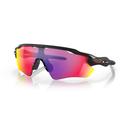
Oakley Radar EV Path Prizm

Oakley Radar EV Path Prizm

The performance shield for runners and cyclists who want maximum coverage and a taller lens. The Prizm tint sharpens contrast, the frame is featherweight O Matter, and the open-edge lens keeps your peripheral view clear. Non-polarized, which most runners prefer for reading the road surface.

Best overall
$170.80 · View on Amazon

$244.0030% off

Price as of November 23, 2026. #ad How we’re funded

2
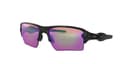
Oakley Flak 2.0 XL Prizm Golf

Oakley Flak 2.0 XL Prizm Golf

The reference golf sunglass. The Prizm Golf tint is tuned to boost the contrast between the fairway, the rough and the sky, so the ball and the contours of the green pop. A half-frame keeps your view open on a swing, and the Plutonite lens blocks 100% UV. Non-polarized, which is the right call for reading greens.

Best for golf
$149.80 · View on Amazon

$214.0030% off

Price as of November 23, 2026. #ad How we’re funded

3
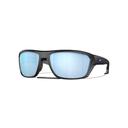
Oakley Split Shot Prizm Deep Water Polarized

Oakley Split Shot Prizm Deep Water Polarized

Oakley's answer to the water. The Split Shot pairs a Prizm Deep Water tint with polarization to cut surface glare and lift the contrast of what's under it, and it ships with a leash and removable side shields. If you want an Oakley specifically for fishing, this is it.

Best on the water
$201.21 · View on Amazon

$286.0030% off

Price as of November 23, 2026. #ad How we’re funded

4
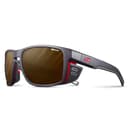
Julbo Shield (REACTIV 2-4 Polarized)

Julbo Shield (REACTIV 2-4 Polarized)

The reference glacier frame, and the one pick here that solves high-altitude snow properly. The REACTIV lens is photochromic across categories 2 to 4, meaning it self-adjusts from ordinary bright daylight all the way to the category 4 darkness you want on a glacier, and it is polarized on top of that. Removable side shields block the light coming up off the snow at your cheekbones.

Best at altitude
$199.96 · View on Amazon

$249.9520% off

Price as of November 23, 2026. #ad How we’re funded

5
Tifosi Veloce (Interchangeable 3-Lens)

Tifosi Veloce (Interchangeable 3-Lens)

The frame to buy if fogging is the actual problem you are trying to solve. Tifosi states it plainly on its own product page — the Veloce runs large lens vents and 'vented lenses prevent fogging' — and it is one of the very few sunglasses, as opposed to safety glasses, where the brand makes that claim in its own words rather than leaving it to a marketplace bullet. The three-lens kit is the other half: a smoke lens for glare, AC Red for flat light, and a genuinely clear lens for the dawn starts and humid evenings when a dark tint is the wrong tool and fog is at its worst.

Best for changing light
$79.95 · View on Amazon

Price as of November 23, 2026. #ad How we’re funded

6
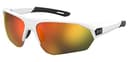
Under Armour Playmaker Wrap

Under Armour Playmaker Wrap

A 72mm wrap built for field sports, which is a genuinely large lens — the width is what keeps sun out of the corner of your eye when you are tracking a ball into the sky rather than looking straight ahead. Rubberized nose and temple pads hold it through a sprint, and it costs a fraction of the premium sport wraps without giving up coverage.

Best for field sports
$57.99 · View on Amazon

Price as of November 23, 2026. #ad How we’re funded

7
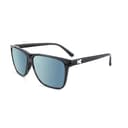
Knockaround Fast Lanes Sport

Knockaround Fast Lanes Sport

Knockaround's sportier frame — a slightly wrapped, grippier take on the Premiums that suits running and active wear better than the flat classic. Polarized and UV400, still cheap. The value sport pick when goodr's shape isn't for you.

Best value
$25.65 · View on Amazon

$38.0033% off

Price as of November 23, 2026. #ad How we’re funded

8
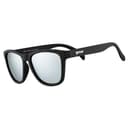
goodr OG

goodr OG

The best $25–35 in sunglasses. The OG is genuinely polarized, UV400, and its rubberized grip coating means it doesn't bounce or slide on a run — the reason it became runners' cult favorite. A squared retro shape that flatters round faces, in dozens of colorways. The value pick, full stop.

Budget pick
$30.00 · View on Amazon

Price as of November 23, 2026. #ad How we’re funded

The picks in full

#1Best overall

Oakley Radar EV Path Prizm

The performance shield for runners and cyclists who want maximum coverage and a taller lens. The Prizm tint sharpens contrast, the frame is featherweight O Matter, and the open-edge lens keeps your peripheral view clear. Non-polarized, which most runners prefer for reading the road surface.

Strengths

  • Tall, open-edge lens maximizes upper-field vision when your head is down
  • Very light O Matter frame with grippy earsocks
  • Prizm Road tint lifts contrast on pavement and trail

Trade-offs

  • Big, unmistakably athletic look off the road
  • Premium price; polarization not offered on the standard Prizm Road
Lens featurePrizm tint, tall shield lens, 100% UV
PolarizedNo
Lens tintPrizm
Frame materialO Matter (nylon)
UV protection100% UV (Plutonite, to 400nm)
Best forRunning, Cycling, Trail

Spec note. The Radar EV raised the lens height over the original Radar for more upper-field coverage; the Prizm Road tint is non-polarized. The listing read on 2026-10-27 is titled 'Oakley Mens OO9208 Radar EV Path Rectangular Sunglasses, Matte Black/Prizm Road, 38 mm' and states the model, the trim and a 38mm lens size; it states no UV figure. The 100% UV figure above is Oakley's own Plutonite claim, cited on this site to oakley.com's lens-technology page (read 2026-07-18) - oakley.com returned 403 Forbidden on 2026-10-27, so it could not be re-read on this date.

Specs read from the product listing, on October 27, 2026. “Not published” means the brand does not state that figure.

#2Best for golf

Oakley Flak 2.0 XL Prizm Golf

The reference golf sunglass. The Prizm Golf tint is tuned to boost the contrast between the fairway, the rough and the sky, so the ball and the contours of the green pop. A half-frame keeps your view open on a swing, and the Plutonite lens blocks 100% UV. Non-polarized, which is the right call for reading greens.

Strengths

  • Prizm Golf tint lifts turf-and-sky contrast to help you read the green
  • Half-frame and open top keep your sightline clear on a swing
  • Grippy Unobtainium earsocks stay put when you sweat

Trade-offs

  • Premium price
  • Non-polarized (correct for golf, but not a do-everything glare lens)
Lens featurePrizm Golf contrast tint, 100% UV
PolarizedNo
Lens tintPrizm Golf
Frame materialO Matter (nylon)
UV protection100% UV (Plutonite, to 400nm)
Best forGolf, Cycling, Running

Spec note. Prizm Golf is a non-polarized tint Oakley engineered to enhance the contrast of grass and dirt against the sky; polarization is deliberately omitted so subtle green contours stay visible.

Specs read from the product listing, on July 18, 2026. “Not published” means the brand does not state that figure.

#3Best on the water

Oakley Split Shot Prizm Deep Water Polarized

Oakley's answer to the water. The Split Shot pairs a Prizm Deep Water tint with polarization to cut surface glare and lift the contrast of what's under it, and it ships with a leash and removable side shields. If you want an Oakley specifically for fishing, this is it.

Strengths

  • Prizm Deep Water + polarization cuts glare and reveals structure below the surface
  • Includes a leash and removable side blinders for bright, open water
  • Plutonite lens blocks 100% UV

Trade-offs

  • The most expensive fishing pick here by a wide margin
  • Large, wrap-heavy frame is sport-specific, not an everyday look
Lens featurePrizm Deep Water, polarized, 100% UV
PolarizedYes
Lens tintPrizm Deep Water
Frame materialO Matter (nylon)
UV protection100% UV (Plutonite, to 400nm)
Best forFishing, Boating, Open water

Spec note. Prizm Deep Water is Oakley's polarized tint tuned for on-the-water use, combining glare reduction with blue-green contrast enhancement.

Specs read from the product listing, on July 18, 2026. “Not published” means the brand does not state that figure.

#4Best at altitude

Julbo Shield (REACTIV 2-4 Polarized)

The reference glacier frame, and the one pick here that solves high-altitude snow properly. The REACTIV lens is photochromic across categories 2 to 4, meaning it self-adjusts from ordinary bright daylight all the way to the category 4 darkness you want on a glacier, and it is polarized on top of that. Removable side shields block the light coming up off the snow at your cheekbones.

Strengths

  • REACTIV photochromic across categories 2 to 4 — one lens from bright daylight to glacier glare
  • Polarized as well as photochromic, which is rare and genuinely useful on snow
  • Removable side shields cut the reflected light coming up from below

Trade-offs

  • Category 4 lenses are not legal for driving in many places — this is a mountain tool, not a road pair
  • The most expensive pair on this site by some distance
Lens featureREACTIV photochromic category 2-4, polarized, side shields
PolarizedYes
Lens tintBrown, REACTIV photochromic (category 2-4)
Frame materialNot published
UV protectionNot published
Best forSkiing, Mountaineering, Glacier travel, Altitude

Spec note. The listing states a brown REACTIV 2-4 polarized lens — a photochromic lens that darkens across filter categories 2 to 4. Category 4 lenses transmit under 8% of visible light and are not approved for driving.

Specs read from the product listing, on August 11, 2026. “Not published” means the brand does not state that figure.

#5Best for changing light

Tifosi Veloce (Interchangeable 3-Lens)

The frame to buy if fogging is the actual problem you are trying to solve. Tifosi states it plainly on its own product page — the Veloce runs large lens vents and 'vented lenses prevent fogging' — and it is one of the very few sunglasses, as opposed to safety glasses, where the brand makes that claim in its own words rather than leaving it to a marketplace bullet. The three-lens kit is the other half: a smoke lens for glare, AC Red for flat light, and a genuinely clear lens for the dawn starts and humid evenings when a dark tint is the wrong tool and fog is at its worst.

Strengths

  • Tifosi's own page states vented lenses prevent fogging, with large vents for airflow
  • UV400 lenses stated to block UVA and UVB, at 28 grams
  • Three interchangeable lenses including a clear one, so low light is covered too
  • Hydrophilic rubber ear and nose pads that grip harder as you sweat

Trade-offs

  • None of the three lenses in this kit is polarized — reflected glare off water or wet road is untouched
  • Vents are holes: they pass wind and grit as readily as they pass water vapor, which is the wrong trade if your problem is dry eye rather than fog
  • Costs more than a vented budget wrap that makes the same claim on the listing alone
Lens featureVented lenses, UV400, 28g, three interchangeable lenses
PolarizedNo
Lens tintSmoke / AC Red / Clear (interchangeable)
Frame materialNot published
UV protectionUV400 (UVA/UVB)
Best forCycling, Running, Humid conditions, Changing light

Spec note. Tifosi's own Veloce page states 'large vents for maximum airflow and debris protection', 'vented lenses prevent fogging and maintain crystal-clear vision', 'UV400 lenses block harmful UVA and UVB rays', 'just 28 grams', 'interchangeable lenses for quick swaps as conditions change' and 'hydrophilic rubber ear and nose pads ensure a secure, no-slip grip that increases as you sweat'. The page does not state the frame material, so that field is null.

Specs read from the product listing, on September 29, 2026. “Not published” means the brand does not state that figure.

#6Best for field sports

Under Armour Playmaker Wrap

A 72mm wrap built for field sports, which is a genuinely large lens — the width is what keeps sun out of the corner of your eye when you are tracking a ball into the sky rather than looking straight ahead. Rubberized nose and temple pads hold it through a sprint, and it costs a fraction of the premium sport wraps without giving up coverage.

Strengths

  • 72mm lens width — real coverage for looking up and across, not just forward
  • Rubberized grip on the nose and temples holds through sweat and sprinting
  • Sits well under a cap brim, which a taller shield frame often does not

Trade-offs

  • The listing does not state polarization — check the variant before you order if you also want glare control
  • 72mm is a genuinely large frame: on a narrow face it sits wide and lets light in at the temples
Lens feature72mm wraparound coverage, rubberized grip
PolarizedNot published
Lens tintNot published
Frame materialNot published
UV protection100% UVA/UVB
Best forBaseball, Field sports, Wide faces

Spec note. Published frame geometry for the UA Playmaker (UA0001) is a 72mm lens width on a 10mm bridge with 130mm temples — unusually wide for a sport wrap, which is where the peripheral coverage comes from. This listing restates the 72mm lens width and 10mm bridge in its own title; it still states no lens tint and no polarization state.

Specs read from the product listing, on November 3, 2026. “Not published” means the brand does not state that figure.

#7Best value

Knockaround Fast Lanes Sport

Knockaround's sportier frame — a slightly wrapped, grippier take on the Premiums that suits running and active wear better than the flat classic. Polarized and UV400, still cheap. The value sport pick when goodr's shape isn't for you.

Strengths

  • Polarized and UV400 with a light sport wrap
  • Grippier fit than the flat Premiums for activity
  • Still inexpensive

Trade-offs

  • Not as no-slip as a dedicated running frame
  • Budget hinges and coatings
Lens featurePolarized, UV400, light sport wrap
PolarizedYes
Lens tintVaries by colorway
Frame materialPolycarbonate (plastic)
UV protectionUV400
Best forRunning, Everyday sport, Budget

Spec note. Knockaround lists the Fast Lanes Sport as polarized with UV400 protection.

Specs read from the product listing, on July 18, 2026. “Not published” means the brand does not state that figure.

#8Budget pick

goodr OG

The best $25–35 in sunglasses. The OG is genuinely polarized, UV400, and its rubberized grip coating means it doesn't bounce or slide on a run — the reason it became runners' cult favorite. A squared retro shape that flatters round faces, in dozens of colorways. The value pick, full stop.

Strengths

  • Genuinely polarized and UV400 at a sub-$35 price
  • No-slip, no-bounce grip coating stays put on a run
  • Squared retro shape flatters round faces; dozens of colors

Trade-offs

  • One size — a narrow face may find the OG a touch wide
  • Plastic frame and standard lens won't match a glass premium lens for clarity
Lens featurePolarized, UV400, no-slip grip
PolarizedYes
Lens tintVaries by colorway
Frame materialPolycarbonate (plastic)
UV protectionUV400
Best forRunning, Everyday, Round faces

Spec note. goodr lists the OG as polarized with UV400 protection and a no-slip coating; colorways change but the lens spec is consistent.

Specs read from the product listing, on October 6, 2026. “Not published” means the brand does not state that figure.

What we ranked on

Four criteria, applied in this order. Notice that none of them is brand and none of them is looks.

  1. Does the lens match the sport, or just the marketing? A tint name is not a specification. Oakley publishes what Prizm is designed to do per environment on its own lens-technology pages; Julbo publishes the category range its REACTIV lens moves through. Those are checkable claims. “High-definition clarity” on a marketplace listing is not.
  2. Coverage geometry, which matters more than tint in most sports. The Radar EV is a single tall shield with no lower rim. The Playmaker states a 72 mm lens width. The Split Shot ships with removable side shields. Those are the numbers that decide whether light, wind and debris reach your eye, and almost nobody puts them on a product page.
  3. Whether it stays on. A frame that slides down at mile eight is worse than no frame, because you take it off and then you are squinting. Rubberised temple grips, a rubber nose pad and a frame that is not heavy are what buy this, and they cost about thirty dollars — which is why the budget pick is on this page rather than apologised for.
  4. A stated UV figure. Non-negotiable, and separate from everything above. Darkness is not protection: a dark lens with no ultraviolet filter opens your pupil and lets more UV in than no sunglasses at all. The American Academy of Ophthalmology is explicit that price is not a proxy for protection either. Every pick on this page states 100% UV or UV400 except where we flag it on the card.

The polarization decision, settled

This is the question that sends most sport buyers to the wrong frame, so here is the short version. A polarizing filter removes light that has been reflected off a flat surface. That is exactly what you want when the surface is water and you are trying to see under it, and exactly what you do not want when the surface is a road, a green or a court and the reflection is information.

  • Buy polarized for: fishing, boating, paddling, open water, driving to the trailhead — anything where glare off a surface is the problem. Our fishing roundup and boating roundup are built entirely around it.
  • Think twice for: road cycling and running in the wet, where the sheen on tarmac is how you read a slick patch; golf, where putting-surface reflections carry slope information; downhill skiing on hardpack, where the shine tells you where the ice is.
  • It is irrelevant for: indoor courts, gyms, and any sport played under lights. If a listing in that category leads with polarization, it is selling you a feature the sport does not use.

Our polarized versus non-polarized comparison works through the trade-off properly, and Prizm versus polarized covers the specific Oakley version of this question, because the two are routinely confused inside the same listing.

What the top end buys, honestly

The spread on this page is roughly ten to one, so it is fair to ask what the expensive frames add. Three things, all structural rather than aspirational.

Optics engineered for one environment. A Prizm Golf lens and a Prizm Deep Water lens are different filters with different jobs, and a $25 frame is sold in one generic tint. If your sport has a specific visual problem — picking a white ball off a bright green, seeing a fish under a surface — that is the thing money actually buys here.

Geometry that was designed rather than moulded. Rimless lower edges, published lens widths, interchangeable arms and nose pads, side shields that come off. Cheap wraps copy the silhouette and not the fit.

A route to a replacement lens. Sport frames get scratched, sat on and dropped on rock. A premium frame usually has a lens you can replace; most sub-$40 frames are replaced whole. Our repair and replacement-lens guide covers which brands publish a route and which do not.

And what it does not buy: more ultraviolet protection. UV400 is a ceiling rather than a tier, and it is available for about ten dollars — the same finding our UV400 ranking documents across the whole registry. If your only requirement is that the sun does not damage your eyes, you can stop reading at the budget pick.

Buying for one sport instead of all of them

This page exists for the reader who has not decided yet. If you have, the specific roundup will serve you better, because each is ranked on the criteria that sport actually uses rather than on a general average: golf, running, cycling, fishing, hiking, skiing and snow, baseball, tennis, pickleball and mountain biking all have their own page. The sport hub indexes the rest.

If budget is the constraint rather than the sport, five of the eight frames here sit under $100 — and if golf is the sport, our golf picks under $100 cover what you can and cannot get for that money, because the one thing you cannot buy at this ceiling is a Prizm Golf lens.

One thing to check before you order

Sport frames are sized, and the fit failure is far more common than the optical one. A wrap built for a wide face will sit off the bridge of a narrow one and let light in under the lens; a small frame on a wide face will press at the temples within an hour. Published lens widths are the only reliable number, and most listings do not print one. Our size guide explains how to read the ones that do, and big heads and small faces each have a dedicated ranking if you already know which way you run.
Frequently asked questions

What are the best sport sunglasses overall?

For general daylight sport, the Oakley Radar EV Path: a single tall Plutonite shield with no lower rim, which gives the widest unbroken field of view of anything on this page. It is not the right answer for every sport, though. On the water a polarized frame beats it outright, at altitude a category 3-4 lens beats it, and for a thrown ball a wider wrap beats it. Buy for the sport, not for the brand.

Should sport sunglasses be polarized?

Only for water. A polarizing filter removes light reflected off a flat surface, which is exactly what you want on a lake and exactly what you do not want on wet tarmac, a putting green or hardpack snow, where that reflection is the information telling you the surface is slick. Two of our eight picks state a non-polarized lens on purpose, and both are premium frames.

Are cheap sport sunglasses good enough?

For ultraviolet protection, yes: UV400 is the top of the scale and it is available at around ten dollars, and the American Academy of Ophthalmology is explicit that price is not a proxy for protection. What you give up under about forty dollars is a tint engineered for one environment, a published lens width, and any route to a replacement lens. If you play one sport seriously that is worth paying for. If you want eye protection for a park run, it is not.

What is the difference between Prizm and polarized?

They are unrelated, and a frame can have either, both or neither. Prizm is a tint that manipulates specific wavelengths to raise contrast in a named environment - Prizm Golf, Prizm Deep Water and Prizm Road are different filters. Polarization is a separate layer that removes reflected glare. Most Prizm trims are NOT polarized, which catches buyers out constantly; the SKU tells you, the badge on the temple does not.

Do I need different sunglasses for each sport?

If you play one sport seriously and others casually, no - buy for the serious one and accept the lens is a compromise elsewhere. If two of your sports sit on opposite sides of the polarization question (say fishing and road cycling), then genuinely yes, because no single lens does both. An interchangeable-lens frame is the cheapest middle route, and our interchangeable ranking covers which ones ship with usable spares rather than novelty colours.

What lens category do I need for sport?

Category 2 or 3 for almost everything at ground level - that is what a normal dark sunglass lens is. Category 4 is for glaciers, high snow and sustained altitude, transmits very little light, and is not legal for driving in many places. Most sport listings never state a category at all, which is why our lens-category guide exists and why we flag the few that do.

How much should I spend on sport sunglasses?

Around $30 buys a polarized, UV400, no-slip frame that will do any ground-level sport in daylight. Around $90 buys a light-reactive or interchangeable lens that handles changing conditions. Above $200 you are buying an environment-specific tint, published geometry and a replaceable lens. The step that most changes your experience is the first one - from a generic frame to a sport frame that actually stays on your face.

Sources

  • American Academy of Ophthalmology — How to Pick the Best Sunglasses to Protect Your Eyes — AAO: look for 100% UV / UV400; darker lenses are not more protective; price does not equal protection (accessed July 18, 2026)
  • American Academy of Ophthalmology — The Sun, UV Light and Your Eyes — AAO on how UV exposure raises the risk of cataract, growths and eye cancer (accessed July 18, 2026)
  • American Academy of Ophthalmology — What Are Polarized Lenses For? — AAO on how polarized lenses cut reflected glare from water, pavement and glass (accessed July 18, 2026)
  • American Academy of Ophthalmology — Best Sunglasses for Glare — AAO on polarization as the feature that addresses reflected daytime glare (accessed July 18, 2026)
  • Oakley — Lens Technology — Oakley on lens materials, coatings and tint options (accessed July 18, 2026)
  • Oakley — PRIZM Lens Technology — Oakley's description of contrast-tuned Prizm lens dyes for specific environments (accessed July 18, 2026)
  • Julbo — REACTIV photochromic lenses — Julbo's own REACTIV page: the photochromic lens family it introduced in 2011, built on the "SHR (Super High Reactiv)" process, sold in several category spans and offered with a Glare Control or a High Polarization option (accessed August 19, 2026)
  • Tifosi Optics — Veloce Multi-Sport Sunglasses (brand page) — One of the few sunglasses — as opposed to safety glasses — where the brand makes a fogging claim in its own words: "large vents for maximum airflow and debris protection" and "vented lenses prevent fogging and maintain crystal-clear vision". Also stated on the same page: "UV400 lenses block harmful UVA and UVB rays", "just 28 grams", "interchangeable lenses for quick swaps as conditions change", and "Hydrophilic rubber ear and nose pads ensure a secure, no-slip grip that increases as you sweat". The page does not state the frame material (accessed September 29, 2026)
  • Prevent Blindness — Recommended Sports Eye Protectors — Prevent Blindness: ordinary sunglasses are NOT impact protection; sport eye guards must meet the sport's ASTM standard (accessed August 11, 2026)
  • Knockaround — Warranty Policy (brand page) — The budget brand's own warranty terms, cited for the parts that do not favor the buyer. "After our 45-day Return/Exchange period, your shades stay covered under our Lifetime Warranty", which covers "Manufacturing defects under normal use" — named as "Hinge or spring failure", "Frame assembly or finish defects" and "Lens coating defects not caused by wear". The remedy is not a replacement pair: "If your claim is approved, you'll receive store credit equal to your original purchase price to select a new pair", limited to "One warranty claim per paid pair". Excluded: "Loss or theft", "Accidental damage (sat on, stepped on, run over, heat warping, pet chewing, etc.)", "Normal wear and tear (minor scratches or scuffs)", "Counterfeit goods or purchases from unauthorized sellers", international orders, and "Complimentary, promotional, or free pairs". The unauthorized-seller exclusion is the one that matters when buying any brand through a marketplace (accessed October 13, 2026)

Keep reading