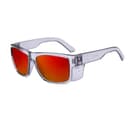
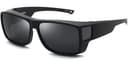
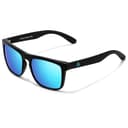
What we ranked on
- Whether the shields come off. The single most useful attribute in this category, and the one most often buried in the listing. Removable shields turn a specialist frame into an everyday one; fixed shields do not.
- What the lens does, not just what the shield does. A shield blocks light from the side; it does nothing about the light coming through the lens. Five of the seven state a polarizing filter and two do not, and we rank the non-polarized ones on their own merits rather than marking them down.
- Filter category, where the listing states it. Two of these state a category 4 lens, which transmits very little visible light. That is correct on a glacier and wrong in a car — category 4 is not legal for driving in many places. Our lens category guide explains the scale and why it is separate from UV protection.
- An impact rating, where there is one. Two of the seven state ANSI Z87.1. That is a tested certification rather than a material claim, and it is rarer than people assume — only five listings in our entire registry put it in the headline lens specification. Our shatterproof ranking covers that gap in full.
Side shields versus a wraparound frame
These get sold as the same thing and they are not. A wraparound bends the lens around the temple so the lens itself covers more of your field; a side shield is a separate piece of material that closes the air gap between the frame and your cheekbone. A good wrap stops most oblique light. Only a shield stops the light coming up at you from a snowfield, and only a shield stops wind and grit.
The practical consequence: if your problem is brightness from the side, a deep wrap like the frames on our wraparound ranking will probably do. If your problem is reflected light from below, wind-watering eyes, or debris, you need the shield and nothing else substitutes. Our base curve and wrap guide explains the geometry behind both.
The snow case, which is where this feature comes from
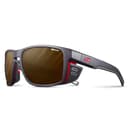
Fresh snow is the most reflective surface most people will ever stand on, and it reflects upward. That is why photokeratitis — sunburn of the cornea — is a mountain injury rather than a beach one, and why the classic glacier frame has leather or moulded shields on both sides. If you are going above the treeline, the shield is not an accessory; it is the part of the frame that is doing the work. Our glacier glasses ranking covers the category-4 lens side of that decision, and our skiing and snow ranking covers resort conditions, where a category 4 lens is usually too dark.
The water case, and the one frame that solves both
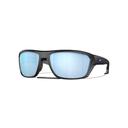
On open water the reflected light is horizontal rather than vertical, so the shield matters less than the polarizing filter — but it still keeps spray off the inside of your lens, which is the thing that actually ends a day of fishing. The Split Shot is the frame here that handles both: a polarized contrast lens for what is under the surface, and shields that come off when you leave the boat. Our fishing ranking and boating ranking cover the wider field, most of which has no shields at all.
The work case, and why it looks different
Two frames here state ANSI Z87.1, the American impact standard for eye and face protection, and both are built as workwear that happens to be tinted. If you are buying for a job site rather than for a mountain, the certification matters more than the shield and you should start at our Z87.1 safety ranking, which ranks the field on the standard itself. The shields are a bonus there rather than the point.
One genuine caution: a side shield restricts peripheral vision, which is a safety trade-off in traffic and around moving equipment. That is the main argument for removable shields, and it is why we have ranked a removable-shield frame first.
If you wear prescription glasses
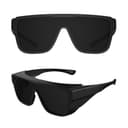
One of the seven is a fit-over, which is the only route to side shields if you wear spectacles and do not want a second prescription. It sits over your own frames and closes the gap at the temples, which is the exact complaint most glasses wearers have about ordinary fit-overs. Our fit-over guide covers the format in full, and clip-ons versus fit-overs covers the alternative, which cannot do side coverage at all.