Shade & Temple

Best Shatterproof Sunglasses

62 of the 114 listings we track state a shatter-resistant lens material. Five state an ANSI impact certification. Seven picks that keep the two claims apart - for sport, kids and the range.

By Stephen V.Last updated How we pick

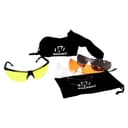
The verdict first. Our top pick is the Under Armour Playmaker Wrap, because it combines the two things that actually decide whether a lens reaches your eye — a polycarbonate lens and a stated 72 mm of lens width wrapping past the orbital bone — in a frame built for sports where something is thrown. The budget pick is the Walker’s Sport Glasses at around fifteen dollars, which ships four polycarbonate lenses for range and changing light and is the cheapest route to a spare lens rather than a spare frame.

And here is the thing you came for. “Shatterproof” is two completely different claims wearing one word, and the gap between them is enormous:

  • A material claim. Polycarbonate — and its branded variants like Oakley’s Plutonite, plus TAC laminates — does not shatter into fragments the way a glass or acrylic lens can. Of the 114 listings in our registry, 62 state a polycarbonate, Plutonite or TAC lens. That is more than half the market, and it costs almost nothing. It is also why the word appears on so many cheap listings.
  • A certification claim. ANSI Z87.1 is the American standard for occupational eye and face protection, and a lens carrying it has been tested against defined impacts rather than described. Of those same 114 listings, exactly five put a Z87.1 rating in the headline lens specification.

Sixty-two versus five is the entire story of this category. Almost every frame you can buy is made of a material that resists shattering. Almost none of them has been tested, and almost none of them claims to have been. If a listing says “shatterproof” and nothing else, it is telling you what the plastic is, not what the lens survived. We state which claim each pick is making on its own card.

Who should be reading which page. If you need eye protection for a job — a site, a workshop, a yard, a chainsaw — the certification is the only thing that matters and you should start at our ANSI Z87.1 ranking, which ranks that field on the standard itself. None of its six picks is on this page, deliberately. This page is for the other three buyers: sport, children, and anyone who simply keeps breaking sunglasses.

What impact resistance does not cover. Scratches. Polycarbonate is the most impact-tolerant common lens material and one of the softest, so it scratches far more readily than glass. The two properties pull in opposite directions, and the American Academy of Ophthalmology is clear that a scratched lens should be replaced rather than lived with. Our glass versus polycarbonate comparison works through the trade-off, and our glass ranking covers the opposite choice.

Prices below are live. Each row carries the figure our feed last read and the date it read it — currently November 23, 2026. The seven run from about fifteen dollars to about two hundred and forty-four.

How this is funded: we earn a commission if you buy through our links, at no extra cost to you. It never changes which product we recommend, and we’ll tell you when we’d skip one. Full disclosure.

Quick picks

Ranked on lens spec, UV protection, tint fit and buyer value. Select a row to jump to the full write-up. We have not field-tested these — here is exactly what we do instead.

#ProductBest forPrice
1
Under Armour Playmaker Wrap

Under Armour Playmaker Wrap

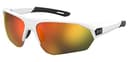
A 72mm wrap built for field sports, which is a genuinely large lens — the width is what keeps sun out of the corner of your eye when you are tracking a ball into the sky rather than looking straight ahead. Rubberized nose and temple pads hold it through a sprint, and it costs a fraction of the premium sport wraps without giving up coverage.

Best overall
$57.99 · View on Amazon

Price as of November 23, 2026. #ad How we’re funded

2
Oakley Radar EV Path Prizm

Oakley Radar EV Path Prizm

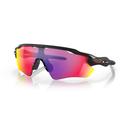
The performance shield for runners and cyclists who want maximum coverage and a taller lens. The Prizm tint sharpens contrast, the frame is featherweight O Matter, and the open-edge lens keeps your peripheral view clear. Non-polarized, which most runners prefer for reading the road surface.

Best premium
$170.80 · View on Amazon

$244.0030% off

Price as of November 23, 2026. #ad How we’re funded

3
Global Vision Hercules 7 Photochromic

Global Vision Hercules 7 Photochromic

The one riding lens that handles a ride home after sunset. It is photochromic — clear indoors and at dusk, smoke in daylight — and ANSI Z87.1 rated for impact, which on a motorcycle is not a theoretical benefit given what a stone off a truck tire does at highway speed. The trade-off is that the listing publishes the impact standard and not a UV figure.

Best certified lens
$39.99 · View on Amazon

Price as of November 23, 2026. #ad How we’re funded

4
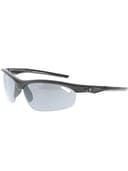
Tifosi Veloce (Interchangeable 3-Lens)

Tifosi Veloce (Interchangeable 3-Lens)

The frame to buy if fogging is the actual problem you are trying to solve. Tifosi states it plainly on its own product page — the Veloce runs large lens vents and 'vented lenses prevent fogging' — and it is one of the very few sunglasses, as opposed to safety glasses, where the brand makes that claim in its own words rather than leaving it to a marketplace bullet. The three-lens kit is the other half: a smoke lens for glare, AC Red for flat light, and a genuinely clear lens for the dawn starts and humid evenings when a dark tint is the wrong tool and fog is at its worst.

Best interchangeable
$79.95 · View on Amazon

Price as of November 23, 2026. #ad How we’re funded

5
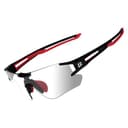
ROCKBROS Photochromic Sports Sunglasses

ROCKBROS Photochromic Sports Sunglasses

The cheapest honest way to try a photochromic lens. ROCKBROS lists a 22g UV400 light-reactive lens with an optional prescription insert behind it — which is the real story here, because a photochromic sport lens for people who wear glasses normally costs several times this. Budget coatings and a longer tint-transition than a premium lens are the price you pay.

Best for cycling
$25.49 · View on Amazon

$29.9915% off

Price as of November 23, 2026. #ad How we’re funded

6
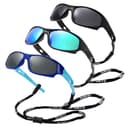
Pro Acme TR90 Kids Polarized Sports

Pro Acme TR90 Kids Polarized Sports

A TR90 sport frame scaled down for children, sold as a three-pack with straps for ages 3-12. TR90 is the same nylon family the adult sport brands use — it is why these bend hard and come back rather than cracking — and a three-pack is a realistic response to how often a child's sunglasses disappear.

Best for kids
$13.58 · View on Amazon

$16.1316% off

Price as of November 23, 2026. #ad How we’re funded

7
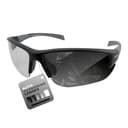
Walker's Sport Glasses, 4 Interchangeable Lenses

Walker's Sport Glasses, 4 Interchangeable Lenses

The point of a four-lens kit is not that you get four pairs — it is that shooting is the one outdoor activity where the useful tint genuinely changes with the target and the background, and a kit lets you swap rather than guess. Impact-resistant polycarbonate with a case and pouch, at a price where owning the amber, the clear and the smoke lens costs less than one mid-tier frame.

Budget pick
$15.17 · View on Amazon

$19.9924% off

Price as of November 23, 2026. #ad How we’re funded

The picks in full

#1Best overall

Under Armour Playmaker Wrap

A 72mm wrap built for field sports, which is a genuinely large lens — the width is what keeps sun out of the corner of your eye when you are tracking a ball into the sky rather than looking straight ahead. Rubberized nose and temple pads hold it through a sprint, and it costs a fraction of the premium sport wraps without giving up coverage.

Strengths

  • 72mm lens width — real coverage for looking up and across, not just forward
  • Rubberized grip on the nose and temples holds through sweat and sprinting
  • Sits well under a cap brim, which a taller shield frame often does not

Trade-offs

  • The listing does not state polarization — check the variant before you order if you also want glare control
  • 72mm is a genuinely large frame: on a narrow face it sits wide and lets light in at the temples
Lens feature72mm wraparound coverage, rubberized grip
PolarizedNot published
Lens tintNot published
Frame materialNot published
UV protection100% UVA/UVB
Best forBaseball, Field sports, Wide faces

Spec note. Published frame geometry for the UA Playmaker (UA0001) is a 72mm lens width on a 10mm bridge with 130mm temples — unusually wide for a sport wrap, which is where the peripheral coverage comes from. This listing restates the 72mm lens width and 10mm bridge in its own title; it still states no lens tint and no polarization state.

Specs read from the product listing, on November 3, 2026. “Not published” means the brand does not state that figure.

#2Best premium

Oakley Radar EV Path Prizm

The performance shield for runners and cyclists who want maximum coverage and a taller lens. The Prizm tint sharpens contrast, the frame is featherweight O Matter, and the open-edge lens keeps your peripheral view clear. Non-polarized, which most runners prefer for reading the road surface.

Strengths

  • Tall, open-edge lens maximizes upper-field vision when your head is down
  • Very light O Matter frame with grippy earsocks
  • Prizm Road tint lifts contrast on pavement and trail

Trade-offs

  • Big, unmistakably athletic look off the road
  • Premium price; polarization not offered on the standard Prizm Road
Lens featurePrizm tint, tall shield lens, 100% UV
PolarizedNo
Lens tintPrizm
Frame materialO Matter (nylon)
UV protection100% UV (Plutonite, to 400nm)
Best forRunning, Cycling, Trail

Spec note. The Radar EV raised the lens height over the original Radar for more upper-field coverage; the Prizm Road tint is non-polarized. The listing read on 2026-10-27 is titled 'Oakley Mens OO9208 Radar EV Path Rectangular Sunglasses, Matte Black/Prizm Road, 38 mm' and states the model, the trim and a 38mm lens size; it states no UV figure. The 100% UV figure above is Oakley's own Plutonite claim, cited on this site to oakley.com's lens-technology page (read 2026-07-18) - oakley.com returned 403 Forbidden on 2026-10-27, so it could not be re-read on this date.

Specs read from the product listing, on October 27, 2026. “Not published” means the brand does not state that figure.

#3Best certified lens

Global Vision Hercules 7 Photochromic

The one riding lens that handles a ride home after sunset. It is photochromic — clear indoors and at dusk, smoke in daylight — and ANSI Z87.1 rated for impact, which on a motorcycle is not a theoretical benefit given what a stone off a truck tire does at highway speed. The trade-off is that the listing publishes the impact standard and not a UV figure.

Strengths

  • Photochromic clear-to-smoke lens covers a ride that runs into the evening
  • ANSI Z87.1 impact rating — the relevant standard for debris at speed
  • One pair replaces the usual clear-plus-tinted two-pair setup

Trade-offs

  • The listing states the Z87.1 impact rating but does NOT publish a UV figure — a safety rating is not a UV rating
  • Photochromic lenses react to ultraviolet, so they barely darken behind a car windshield
Lens featurePhotochromic clear-to-smoke, ANSI Z87.1 impact rated
PolarizedNot published
Lens tintPhotochromic — clear to smoke
Frame materialNot published
UV protectionNot published
Best forMotorcycle, Dusk riding, Changing light

Spec note. The listing states an auto-darkening clear-to-smoke photochromic lens certified to ANSI Z87.1. It does not state a UV rating, so we do not claim one.

Specs read from the product listing, on August 11, 2026. “Not published” means the brand does not state that figure.

#4Best interchangeable

Tifosi Veloce (Interchangeable 3-Lens)

The frame to buy if fogging is the actual problem you are trying to solve. Tifosi states it plainly on its own product page — the Veloce runs large lens vents and 'vented lenses prevent fogging' — and it is one of the very few sunglasses, as opposed to safety glasses, where the brand makes that claim in its own words rather than leaving it to a marketplace bullet. The three-lens kit is the other half: a smoke lens for glare, AC Red for flat light, and a genuinely clear lens for the dawn starts and humid evenings when a dark tint is the wrong tool and fog is at its worst.

Strengths

  • Tifosi's own page states vented lenses prevent fogging, with large vents for airflow
  • UV400 lenses stated to block UVA and UVB, at 28 grams
  • Three interchangeable lenses including a clear one, so low light is covered too
  • Hydrophilic rubber ear and nose pads that grip harder as you sweat

Trade-offs

  • None of the three lenses in this kit is polarized — reflected glare off water or wet road is untouched
  • Vents are holes: they pass wind and grit as readily as they pass water vapor, which is the wrong trade if your problem is dry eye rather than fog
  • Costs more than a vented budget wrap that makes the same claim on the listing alone
Lens featureVented lenses, UV400, 28g, three interchangeable lenses
PolarizedNo
Lens tintSmoke / AC Red / Clear (interchangeable)
Frame materialNot published
UV protectionUV400 (UVA/UVB)
Best forCycling, Running, Humid conditions, Changing light

Spec note. Tifosi's own Veloce page states 'large vents for maximum airflow and debris protection', 'vented lenses prevent fogging and maintain crystal-clear vision', 'UV400 lenses block harmful UVA and UVB rays', 'just 28 grams', 'interchangeable lenses for quick swaps as conditions change' and 'hydrophilic rubber ear and nose pads ensure a secure, no-slip grip that increases as you sweat'. The page does not state the frame material, so that field is null.

Specs read from the product listing, on September 29, 2026. “Not published” means the brand does not state that figure.

#5Best for cycling

ROCKBROS Photochromic Sports Sunglasses

The cheapest honest way to try a photochromic lens. ROCKBROS lists a 22g UV400 light-reactive lens with an optional prescription insert behind it — which is the real story here, because a photochromic sport lens for people who wear glasses normally costs several times this. Budget coatings and a longer tint-transition than a premium lens are the price you pay.

Strengths

  • Photochromic UV400 lens at a fraction of a premium light-reactive pair
  • 22g stated weight — barely there on a long ride
  • Includes a myopia insert frame for prescription wearers

Trade-offs

  • Budget lens coatings scratch faster than a Tifosi or Oakley
  • Not polarized, and the tint transition is slower than premium photochromics
Lens featurePhotochromic UV400 lens, 22g, prescription insert
PolarizedNo
Lens tintPhotochromic (light-reactive)
Frame materialTR90
UV protectionUV400
Best forCycling, Running, Fishing, Prescription insert

Spec note. ROCKBROS lists a 22g photochromic UV400 lens supplied with a myopia (prescription) insert frame.

Specs read from the product listing, on August 10, 2026. “Not published” means the brand does not state that figure.

#6Best for kids

Pro Acme TR90 Kids Polarized Sports

A TR90 sport frame scaled down for children, sold as a three-pack with straps for ages 3-12. TR90 is the same nylon family the adult sport brands use — it is why these bend hard and come back rather than cracking — and a three-pack is a realistic response to how often a child's sunglasses disappear.

Strengths

  • TR90 nylon frame — the same material family as adult sport frames, and near-unbreakable
  • Polarized, with straps included
  • Three pairs in the pack covers the loss rate

Trade-offs

  • No published UV rating alongside the polarization claim
  • Sport styling, so it will not suit a child who wants a lifestyle shape
Lens featureTR90 frame, polarized, three-pack with straps
PolarizedYes
Lens tintVaries by pack (mirrored and plain)
Frame materialTR90
UV protectionNot published
Best forChildren's sport, Ages 3-12, Everyday

Spec note. The listing states unbreakable TR90 polarized kids' sunglasses supplied with straps for ages 3-12, sold as a multi-pack. A UV rating is not published.

Specs read from the product listing, on August 11, 2026. “Not published” means the brand does not state that figure.

#7Budget pick

Walker's Sport Glasses, 4 Interchangeable Lenses

The point of a four-lens kit is not that you get four pairs — it is that shooting is the one outdoor activity where the useful tint genuinely changes with the target and the background, and a kit lets you swap rather than guess. Impact-resistant polycarbonate with a case and pouch, at a price where owning the amber, the clear and the smoke lens costs less than one mid-tier frame.

Strengths

  • Four interchangeable lenses cover bright sun, overcast and low light in one kit
  • Impact-resistant polycarbonate, the material safety standards are written around
  • Comes with a weatherproof case, so the spare lenses survive being carried

Trade-offs

  • The listing does not state an ANSI Z87.1 marking — check the frame before treating it as PPE
  • Interchangeable lenses mean more handling, and handling is how lenses get scratched
Lens featureFour interchangeable polycarbonate lenses
PolarizedNot published
Lens tintInterchangeable lens set
Frame materialNot published
UV protectionNot published
Best forShooting, Hunting, Clay & range, Changing light

Spec note. The listing states impact-resistant polycarbonate lenses in a four-lens interchangeable kit with a case, pouch and sleeve. It does NOT state an ANSI Z87.1 marking or a UV figure — both matter here and neither should be assumed.

Specs read from the product listing, on August 19, 2026. “Not published” means the brand does not state that figure.

What we ranked on

  1. Which claim the listing actually makes. A stated ANSI Z87.1 rating outranks a stated material, and a stated material outranks the word “shatterproof” on its own. One pick here states the certification; the rest state the material and we say so plainly rather than letting the ambiguity do the selling.
  2. Coverage, which is what the lens is protecting. A lens that does not shatter is irrelevant if the object arrives beside it. Published lens widths and a wrap that passes the orbital bone are what matter, and they are published far less often than they should be.
  3. Frame material, not just lens material. A polycarbonate lens in a brittle frame is still a frame that snaps. TR90 and Grilamid are the two frame materials here that flex rather than crack — ten listings in our registry state TR90 — and that is most of why the kids pick is on this page.
  4. Whether the lens can be replaced. The cheapest insurance against impact damage is a spare lens. Two picks here ship with multiple lenses, which makes a scratched or cracked lens an inconvenience rather than a replacement purchase.

Polycarbonate, Plutonite, TAC and nylon, in one paragraph each

Polycarbonate is the default. It is light, it blocks ultraviolet inherently, and it deforms rather than fragments under impact. It is also soft, so it scratches, and most of the 62 listings in our count are this.

Plutonite is Oakley’s own polycarbonate formulation, and the brand publishes what it is designed to do on its lens technology pages. Treat it as polycarbonate with a documented spec behind it rather than as a different material.

TAC is a laminated lens, usually seven layers, used throughout the budget polarized market because the polarizing film sits between layers. It resists shattering well and delaminates at the edges over time if it gets wet repeatedly.

Nylon and Trivex-type materials sit between polycarbonate and glass for optical clarity and are rarer at the prices on this page. Our frame materials guide covers the frame side of the same question, which matters more than most buyers expect.

Children, which is the single clearest case for this category

If you are buying for a child, impact resistance is not a nice-to-have — it is the specification. Children fall onto their faces, and a lens that fragments is the worst possible outcome. Prevent Blindness and the American Academy of Ophthalmology both treat polycarbonate as the default recommendation for children’s eyewear for exactly this reason. Pair it with a frame material that flexes: TR90 bends a long way before it breaks, which is why the kids pick here is a TR90 frame rather than the cheapest polycarbonate one. Our kids ranking covers the full field including fit for small faces, and whether children need sunglasses at all answers the question underneath it.

Sport, and why coverage beats material

For thrown and struck-ball sports the lens material is table stakes — every sport frame uses polycarbonate — and the differentiator is geometry. A wrap that extends past the orbital bone protects against an angle of impact a flat lens simply does not cover, and Prevent Blindness’s sports eye-protection guidance is built around exactly that: coverage and a frame that stays in place. That is why our top pick is a 72 mm wrap rather than the most expensive lens on the page. Our sport ranking covers the wider field, and baseball and shooting and hunting are the two sports where this page’s logic matters most.

One honest caveat: sunglasses are not goggles. For squash, racquetball, paintball and anything with a small fast projectile, a sport goggle with a certified rating is the correct product and no sunglass frame substitutes. Our sunglasses versus goggles comparison covers where the line sits.

What you should actually check on a listing

  • The lens material row, by name. “Polycarbonate”, “TAC” or a branded equivalent. If the listing only says “shatterproof”, you have been told nothing testable.
  • Whether Z87.1 appears, and where. A certification marked on the lens and temple is meaningfully different from the word appearing in the title. Only five of our 114 listings state it in the lens specification at all.
  • The UV figure, separately. Impact resistance and ultraviolet protection are unrelated specifications. Polycarbonate blocks UV inherently, but the listing should still state the figure — our UV400 ranking counts how many actually do.
  • Whether a replacement lens exists. For a frame you expect to abuse, this is worth more than any material claim. Our repair guide covers which brands publish a route.
Frequently asked questions

What are the best shatterproof sunglasses?

For sport, the Under Armour Playmaker Wrap: a polycarbonate lens with a stated 72 mm width that wraps past the orbital bone, which is the combination that decides whether an object reaches your eye. For a certified lens rather than a material claim, the Global Vision Hercules 7 states ANSI Z87.1. For the cheapest route to a spare lens, the Walker's four-lens set at around fifteen dollars.

Are shatterproof and impact resistant the same thing?

Not quite, and the difference is the whole category. Shatterproof is usually a material claim - polycarbonate and TAC lenses deform rather than fragment, and 62 of the 114 listings we track state one of those materials. Impact resistant, when it means anything testable, points at ANSI Z87.1, a certification only five of those listings state. One is near-universal and costs nothing; the other is rare.

What does ANSI Z87.1 actually mean?

It is the American national standard for occupational and educational eye and face protection, and a lens marked to it has been tested against defined impacts rather than simply described as tough. OSHA's eye and face protection requirements are written around it. For a job site it is the specification that matters; for a park run it is reassuring but not necessary.

Are polycarbonate lenses unbreakable?

No lens is unbreakable, but polycarbonate is the most impact-tolerant common lens material and it deforms rather than fragmenting, which is the outcome that matters for your eye. The trade-off is that it is soft and scratches far more easily than glass. If you want scratch resistance instead, glass is the opposite choice - and only five listings in our registry carry it.

What sunglasses are best for kids?

Polycarbonate lenses in a frame material that flexes - TR90 is the usual answer, because it bends a long way before it breaks. Prevent Blindness and the American Academy of Ophthalmology both treat polycarbonate as the default for children's eyewear because a fragmenting lens is the worst possible outcome of a fall. Fit matters as much as material; our kids ranking covers both.

Can sunglasses replace safety glasses at work?

Only if they carry the certification. A tinted frame with a polycarbonate lens and no Z87.1 marking is not personal protective equipment, whatever the listing says. If you need eye protection for work, start at our ANSI Z87.1 ranking, which ranks the field on the standard rather than on the tint - none of its picks appears on this page.

Do shatterproof sunglasses scratch easily?

Yes, and that is the honest cost of the material. Polycarbonate is impact-tolerant because it is relatively soft, and softness is also what makes it scratch. Buy a frame whose lens can be replaced, use the case rather than your shirt, and replace a lens once scratches sit in your line of sight - the American Academy of Ophthalmology treats a scratched lens as one to replace rather than tolerate.

Sources

Keep reading