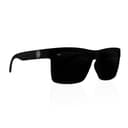
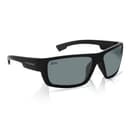
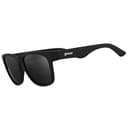
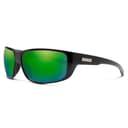
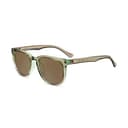
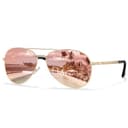
The verdict first. Our top pick is the NEVEN Tombstone, a polarized frame in a large, square, angular shape that fits the faces most sub-$100 eyewear is cut too small for — it is the pick here that reads as an adult pair of sunglasses rather than as a cheap one. The budget pick is the Duco 3025K Polarized Aviator at around thirty dollars, the cheapest frame on this page that states both a polarizing filter and a UV rating in a classic shape you can wear anywhere.
Why this page is not a slice of our main men’s roundup. It shares nothing with it. Five of the six picks on best sunglasses for men sit above this ceiling — two Ray-Bans, two Oakleys and a Costa — so the honest version of this question is not “which of those is cheapest”, it is “what replaces them”. The seven below also share nothing with our general under-$100 ranking or our polarized under-$100 ranking. At the last refresh, 84 of the 114 listings we track carried a live price under this line, so there is plenty of field to do that with.
What replaces the heritage brands under $100 is a different kind of company. Not cheaper versions of Ray-Ban and Oakley — smaller American sunglass houses that never built a luxury price in the first place. Suncloud, Knockaround, NEVEN and Hobie all sell a polarized lens with a stated UV figure at between a quarter and a half of the premium price, and all four publish what the lens is rather than describing it. That is the actual trade: you give up the name on the temple and the resale value, and you keep the filter.
And here is the inversion that matters most. Every one of the seven picks below states a polarizing filter. Four of the five sub-$300 frames on our main men’s page do not — the standard Wayfarer, the standard Holbrook, the Holbrook XL and the G-15 Aviator are all non-polarized base trims. If glare control is what you are buying, this page delivers it more reliably than the page above it does, and our polarized ranking documents that pattern across the whole registry.
What you do give up, honestly. Three things. A glass lens, which effectively does not exist under $100 — our glass ranking carries five listings and the cheapest is well above this line. A published frame weight, which almost nothing at any price states. And a repair programme: most frames here are replaced rather than repaired, which is fine if you lose sunglasses and expensive if you do not. Our page on whether expensive sunglasses are worth it is the long version of that argument.
Every pick below carried a live price under $100 when our feed last refreshed, on November 23, 2026. The button on each row shows today’s figure and the date it was read rather than a number typed into this page — one pick sits close enough to the ceiling that a price change could push it over, and we would rather you see that happen than hide it.
What we ranked on
- A stated polarizing filter. Under $100 this is the single feature with the biggest effect on how sunglasses feel to wear, and it is the feature premium frames most often leave out of their base trims. Every pick here states it.
- A stated ultraviolet figure. Separate from the above and non-negotiable. UV400 is a ceiling, not a tier — it costs about ten dollars and nothing above it exists at any price. The American Academy of Ophthalmology is explicit that price is not a proxy for protection, which is exactly why this page can exist.
- Fit, because this is where cheap frames fail men most often. A lot of sub-$100 eyewear is cut to one middling size. Three picks here are explicitly built large, and we say which, because a frame that is too narrow lets light in at the temples and leaves marks by lunchtime.
- A frame that can take a knock. At this price you are replacing rather than repairing, so a frame material that flexes matters more than one that looks expensive. Our frame materials guide covers which does which.
What $100 actually buys a man right now
Three things, reliably. A genuinely polarized lens with a stated UV rating. A frame built in a real size rather than a notional one. And a lens tint chosen for a job — low light, water, road — rather than a generic dark grey.
Three things it does not buy. Glass, which does not appear below about $150 in this registry at all. A graded filter: nobody publishes a polarization efficiency figure at $30 or at $300, so the expensive filter and the cheap one both get the word and neither gets a number. And a lens you can replace — which, if you are rough on sunglasses, is the real argument for spending more. Our repair guide covers who publishes a route.
The fit question, which matters more than the brand
The most common complaint about sunglasses in this price band is not optical, it is dimensional: the frame is too small. Three of these picks are built for larger faces and one is built specifically for a big head, and if that is you, that single variable will do more for your experience than doubling the budget. Our big heads ranking and size guide cover how to read the numbers when a listing publishes them.
In the other direction, if frames slide down your nose constantly, the cause is usually bridge geometry rather than weight, and a low-bridge fit solves it outright. Our low-bridge guide and page on why sunglasses slide down cover it properly — and both are cheaper fixes than a new pair.
Buying for a specific use instead
If you already know what the sunglasses are for, a use-specific ranking will serve you better than a general one. The four that most men land on: driving, where a polarized brown or grey lens is the usual answer; fishing, where polarization is the entire product; sport, where coverage geometry beats everything else; and travel, which is ranked on the risk of losing them.
And if the ceiling is the thing you want to move, both directions have a page. Our under-$50 ranking is the honest answer for anyone who loses a pair a season, and our under-$200 and under-$300 rankings cover the rungs above, where the thing you start paying for is the lens rather than the frame.
Two things to check before you order
- Read the SKU, not the model name. Plenty of brands sell the same frame in polarized and non-polarized trims at different prices, and the listing is the only place that distinguishes them. This is how most people end up with a non-polarized pair they thought was polarized.
- Check the UV row separately from the tint. Darkness is not protection. If a listing describes the lens colour at length and never states a UV figure, treat the omission as the answer — our UV400 ranking counts how often that happens across the registry, and it is more often than you would hope.